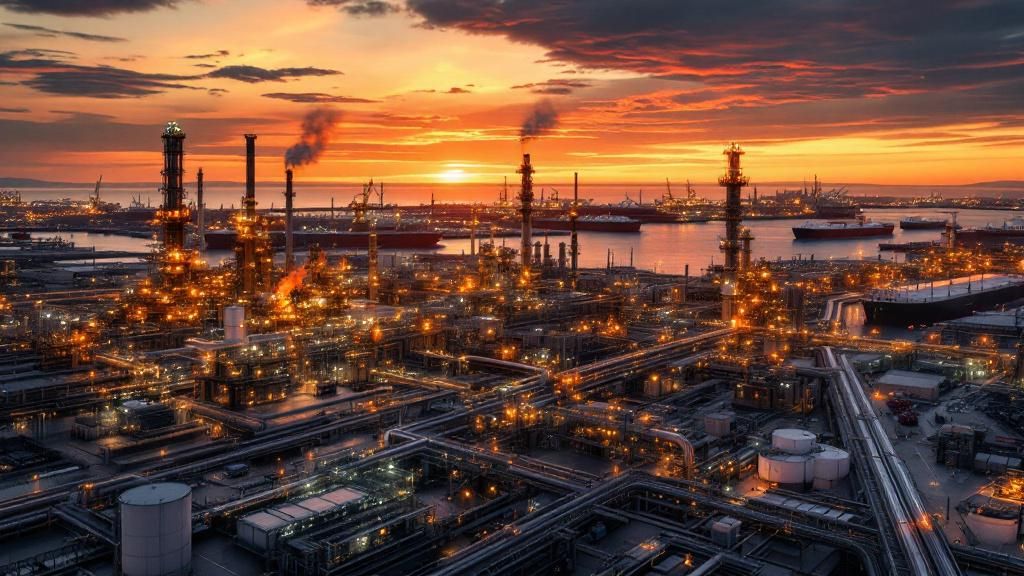
Oil prices have surged nearly 7 per cent following US President Donald Trump’s statement that America will intensify its operations against Iran over the coming weeks, whilst providing no concrete approach for concluding the conflict. Brent crude advanced to $107.60 a barrel in the wake of Trump’s statement from the White House, whilst West Texas Intermediate gained 6.4 per cent to approximately $106.50. The jump came as markets had momentarily expected Trump would outline an way out, with crude dipping below $100 before his speech. Instead, Trump repeated threats to bomb Iran “back to the Stone Ages” over the following two to three weeks, leading Asian stock markets to reverse earlier gains and decline significantly. The intensification threatens continued disruption to global energy supplies already heavily strained by the conflict that began on 28 February.
Financial markets react sharply to heightened tensions
Asian equity markets saw significant declines after Trump’s address, reversing the modest improvements they had made in morning trading. Japan’s Nikkei 225 fell 2.4 per cent, whilst South Korea’s Kospi declined more steeply by 4.5 per cent and Hong Kong’s Hang Seng dropped 1.3 per cent. The region has shown itself especially susceptible to the conflict’s economic consequences, in light of its substantial dependence on Middle East energy supplies. Analysts attributed the steep reversals to Trump’s failure to provide reassurance about how soon disruptions to international oil flows might subside, instead indicating a extended conflict ahead.
Market strategists have labelled Trump’s speech as a stark dose of reality that undermined earlier optimism for an ceasefire in the near term. Alberto Bellorin from InterCapital Energy noted the absence of concrete timeline for reopening the Strait of Hormuz, with normal operations now seeming months away rather than weeks. The prolonged timeline for resolution has prompted investors to ready themselves for continued tight supplies of oil and ongoing economic uncertainty across Asia. Tina Soliman-Hunter from Macquarie University observed that Trump’s communication regarding a prolonged conflict has fundamentally shifted market expectations regarding energy supply and price certainty.
- Nikkei 225 fell 2.4 per cent following Trump’s aggressive rhetoric.
- South Korea’s Kospi experienced sharper decline of 4.5 per cent.
- Hong Kong’s Hang Seng fell 1.3 per cent in late-session trading.
- Asia’s vulnerability arises from reliance on Middle Eastern oil supplies.
Hormuz Strait continues to be critical flashpoint
The Strait of Hormuz, among the globally vital energy corridors, has emerged as the epicentre of the intensifying Iran tensions. Oil shipments through this essential shipping route have largely ground to a halt in the wake of Iran’s threats to attack tankers attempting passage in retaliation for US-Israeli strikes. The disruption represents a significant damage to global energy security, with the strait conventionally managing a substantial share of international oil trade. Trump’s comments during his address seemed to recognise the bottleneck, urging fellow countries to assume responsibility themselves and obtain energy resources on their own. However, his unclear appeal for countries to “go to the Strait and just take it” provided little concrete reassurance about how global trade might resume.
The sustained closure of this shipping passage has created considerable unpredictability for energy markets globally. Analysts caution that without a definitive route to reopening the Strait, worldwide petroleum supplies will continue restricted for an extended period. Trump’s inability to specify particular strategic objectives for resolving the standoff has resulted in speculation about when regular maritime commerce might restart. Energy traders are now factoring in sustained supply interruptions, fuelling the sharp increases witnessed in crude oil prices. The geopolitical tensions centred on the Strait underscore how the Iran conflict has transcended regional significance to become a critical global issue.
Shipping disruptions intensify
The suspension of oil shipments through the Strait of Hormuz represents an extraordinary interruption to worldwide energy flows. Iran’s explicit threats to strike tankers crossing the waterway have deterred shipping companies from undertaking passage, effectively creating a blockade without formal declaration. This disruption comes amid increasingly elevated tensions following the start of US-Israeli strikes on 28 February. The severity of the shipping crisis has compelled major international shipping firms to reroute vessels through longer, costlier alternative passages. Energy analysts predict that until diplomatic avenues open or military objectives are clarified, tanker traffic through the Strait will stay severely constrained.
The economic consequences of this shipping disruption extend well beyond oil prices alone. Global supply chains dependent on Middle Eastern energy have started facing widespread supply disruptions. Countries heavily reliant on Gulf oil, especially in Asia, face mounting pressure to find alternative supplies or accept significantly higher energy costs. Trump’s proposal that nations individually obtain fuel from the region provides minimal realistic solution, given the persistent security concerns. Without concrete action to stabilise the Strait, energy markets will likely remain volatile, with crude prices capturing the ongoing uncertainty surrounding one of the world’s most strategically important shipping lanes.
Asia’s energy stability under pressure
| Market | Change |
|---|---|
| Nikkei 225 (Japan) | Down 2.4% |
| Kospi (South Korea) | Down 4.5% |
| Hang Seng (Hong Kong) | Down 1.3% |
| Brent Crude | Up to $107.60 per barrel |
Asia’s exposure to Middle Eastern energy interruptions has been clearly demonstrated by Trump’s aggressive stance and lack of a clear exit strategy from the Iran conflict. Leading share indices across the region fell significantly following his White House speech, with South Korea’s Kospi recording the steepest drop at 4.5%. Japan’s Nikkei 225 fell 2.4% whilst Hong Kong’s Hang Seng slipped 1.3%, reflecting investor concerns about sustained energy supply pressures. The region’s heavy reliance on Gulf oil makes it particularly susceptible to the geopolitical fallout from escalating US-Iran tensions.
Energy security currently constitutes an existential challenge for Asian economies already grappling with volatile markets after hostilities began in February’s latter stages. Trump’s call for other nations independently secure fuel from the Strait of Hormuz provides little comfort, given Iran’s genuine concerns against shipping vessels. Analysts alert Asia faces months of elevated energy costs and supply uncertainty unless diplomatic resolution emerges swiftly. The extended interruption threatens to limit expansion across the region, with manufacturing and transportation sectors especially exposed to continued petroleum price instability.
Analysts caution about extended supply shortages
Market analysts have expressed significant alarm at Trump’s failure to articulate a specific timeline for addressing the Iran conflict, with many now anticipating months rather than weeks of interrupted energy supplies. Alberto Bellorin from InterCapital Energy characterised the President’s address as a “clear market reality check” that demolished previous optimism surrounding an impending ceasefire. The lack of specific details regarding the reopening of the critically important Strait of Hormuz has led energy traders to review their forecasts, with oil prices reflecting the increased uncertainty. Bellorin stressed that Trump’s exhortation for other nations to independently secure fuel from the Gulf has essentially eliminated hopes for swift resolution of worldwide supply chain disruptions.
Tina Soliman-Hunter from Macquarie University noted that Trump’s signalling of extended hostilities has fundamentally shifted market sentiment, with constrained petroleum availability now anticipated to continue indefinitely. The psychological impact of the President’s belligerent rhetoric cannot be underestimated, as markets react to anticipated policy moves rather than current developments. Without a credible diplomatic off-ramp or clear strategic goals, oil markets will remain volatile and unstable. Analysts increasingly view the forthcoming period as a stretch of prolonged financial pressures for oil-importing nations, particularly those in Asia and Europe reliant upon energy supplies from the Middle East.
- Brent crude climbed to $107.60 a barrel following Trump’s speech
- Strait of Hormuz continues to be largely blocked because of Iranian retaliation threats
- Global energy markets expected to remain tight for months ahead
Trump’s diplomatic gambit sparks renewed alarm
President Trump’s unorthodox call for other nations independently secure fuel from the Gulf has generated significant concern among energy analysts and policymakers alike. By essentially transferring responsibility for reopening the Strait of Hormuz to third parties, Trump has suggested a retreat from traditional American role in stabilizing global energy markets. His rhetoric—urging countries to “build up some delayed courage” and simply “take” oil from the disrupted waterway—lacks the diplomatic nuance typically employed during international crises. This approach risks further destabilising an already volatile situation, as nations may resort to independent measures that could escalate tensions rather than ease them.
The President’s statement that the United States has no need for energy from the Middle East continues to erode confidence in American commitment to resolving the crisis. Whilst energy self-sufficiency could prove strategically advantageous for America, global markets remain intrinsically interconnected, implying that American economic wellbeing is inextricably linked to international energy stability. Experts warn that the dismissive rhetoric towards the energy crisis has effectively signalled to markets that extended disruption is acceptable, removing any incentive for rapid negotiation or conflict reduction. This deliberate indifference to global supply chains risks entrenching the existing crisis, potentially prolonging energy price volatility well beyond the government’s estimated timeline.
